

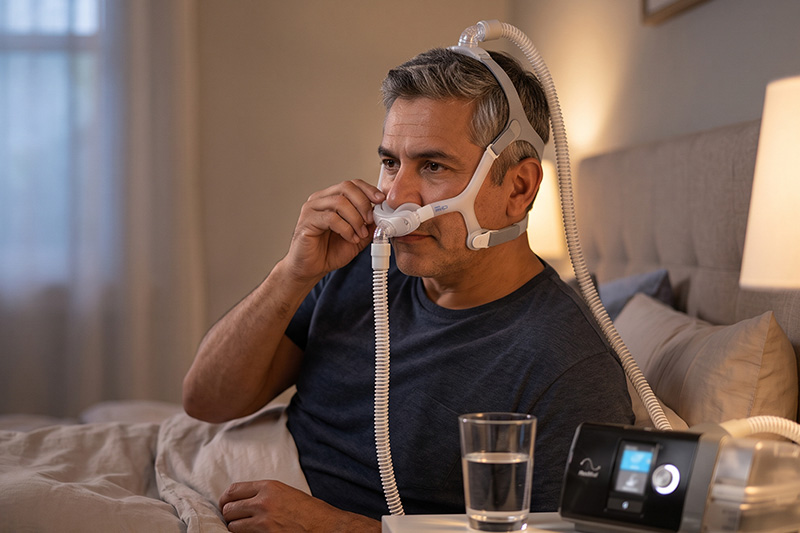
CPAP therapy is very good at keeping the airway open during sleep. Getting used to the machine is a different story.
Dry mouth, congestion, mask leaks, bloating, skin irritation, and trouble falling asleep are the reasons patients get frustrated. Some decide CPAP is making them feel worse, and they stop using it without telling their sleep specialist. That last part is the one that costs people years of bad sleep, because a problem nobody hears about is a problem nobody fixes.
Most CPAP problems can be solved. The work is figuring out whether the trouble is coming from the mask, the pressure, the humidification, your sleeping position, or something else entirely.
Dry Mouth
Dry mouth happens when pressurized air escapes through your mouth, which is most common with a nasal mask. Nasal congestion can also push you into mouth breathing without your realizing it.
Possible solutions include:
- Adding or adjusting heated humidification
- Using heated tubing
- Treating nasal congestion
- Trying a chin strap when appropriate
- Switching to a full-face mask
- Checking for excessive mask leaks
- Staying adequately hydrated during the day
Persistent dry mouth affects comfort and oral health, so bring it up with your sleep provider or your dentist instead of simply putting up with it.
Nasal Congestion or Irritation
CPAP airflow can cause nasal dryness, burning, stuffiness, or a runny nose. Allergies, a deviated septum, or existing nasal inflammation make all of this worse.
Heated humidification is usually the first adjustment. Saline spray or rinsing helps many people. If allergies or chronic obstruction are involved, a provider can recommend the right treatment.
This is a good moment for a confession from the surgical side of my training. The nose gets ignored in sleep medicine, and it should not be. When I was practicing as an ear, nose and throat surgeon, I saw plenty of patients who had been written off as CPAP failures when the real problem was that they could not move air through their nose at all. Treat the nose and the mask suddenly becomes tolerable.
Do not use medicated decongestant sprays continuously without medical advice. Some of them make congestion worse the longer you use them.
Mask Leaks
A leaking mask reduces the effectiveness of treatment, dries your eyes, makes noise, and wakes you or your partner repeatedly.
Leaks happen because the mask is the wrong size or style, the cushion is worn out, facial oils are breaking the seal, or the straps are too tight or too loose.
Clean the cushion the way the manufacturer tells you to and replace worn components. If the leak continues, have the mask refitted.
Tightening the straps as far as they will go is rarely the answer. Too much tension distorts the cushion, which makes the leak worse and gives you painful pressure points on top of it.
Skin Marks and Irritation
Temporary marks are usually harmless. Persistent redness, sores, or broken skin need attention.
Make sure the mask is clean, correctly fitted, and not overtightened. Mask liners or a different cushion material reduce friction for some patients. Switching to a different mask shape can take pressure off an area that has become irritated.
Contact your provider if you develop persistent sores, swelling, or a possible allergic reaction.
Aerophagia and Bloating
Aerophagia occurs when air enters the esophagus and stomach rather than passing only through the airway. It causes belching, abdominal pressure, bloating, and gas after CPAP use.
Possible contributors include excessive pressure, mouth leaks, sleeping position, reflux, or difficulty coordinating your breathing with the machine.
Your provider may review your pressure data, change comfort settings, consider a different pressure mode, or look for another cause. Do not change your prescribed pressure on your own. Dropping the pressure far enough to stop the bloating often leaves the sleep apnea inadequately treated, and then you have a comfortable machine that is not doing its job.
Claustrophobia
Wearing a mask can trigger anxiety or a sense of being trapped. That reaction is real, and gradual exposure helps.
Start by holding the mask near your face while you are awake. Next, wear it without connecting the tubing. Then use the machine while reading or watching television. Once the sensation feels ordinary, try it in bed.
A smaller nasal mask or nasal pillow mask feels less restrictive to many eligible patients. Relaxation exercises and the machine's ramp feature also make the transition easier.
Difficulty Exhaling
Some patients feel as though they are breathing out against too much pressure. Many machines have pressure-relief settings that lower the pressure slightly during exhalation.
Your sleep specialist can also determine whether your prescribed pressure, mask type, or PAP mode needs adjustment. Never reduce the therapeutic pressure without guidance.
Trouble Falling Asleep With CPAP
The sound, the airflow, the tubing, and the sensation of the mask all make sleep harder at first.
Practice wearing CPAP while you are awake so bedtime is not your first exposure. Keep the device below the level of your mattress when appropriate, arrange the tubing so it does not pull on the mask, and hold to a consistent bedtime routine.
If you lie awake for long stretches, insomnia may need separate attention. CPAP treats obstructive breathing. It does not automatically treat every cause of poor sleep.
I will add something I say to patients almost every week, because the reverse of this problem is more common than people think. At least 30% of people who have sleep apnea also have insomnia, and a good number of patients who arrive convinced they have insomnia are actually having their sleep broken by their breathing. If you wake at three or four in the morning wide awake, ask yourself why. In many cases the answer is that you had been struggling to breathe for hours, your oxygen dropped, and your brain woke you up on purpose. That is sleep apnea wearing an insomnia costume.
Feeling Worse After Starting CPAP
Some people feel more tired during the adjustment period. Persistent worsening deserves evaluation.
Possible explanations include:
- Continued mask leaks
- Insufficient nightly use
- Incorrect pressure
- Residual breathing events
- Central sleep apnea has developed
- Insomnia or another sleep disorder
- Medication effects
- An unrelated medical condition
Your provider can review the data recorded by the machine and tell you whether the therapy is doing what it is supposed to do. Worth knowing: about 10-30% of patients have some residual sleepiness even after their apnea is treated with CPAP, and that is a treatable problem in its own right rather than a reason to give up.
Seek urgent medical care for severe shortness of breath, chest pain, confusion, or other alarming symptoms rather than assuming CPAP is responsible.
When to Consider an Oral Appliance
If repeated adjustments do not make CPAP tolerable, a custom oral appliance may be an alternative for eligible patients.
Oral appliance therapy works by gently advancing the lower jaw to help maintain an open airway. There is no mask, no tubing, no electricity, and no pressurized airflow.
The American Academy of Sleep Medicine recommends oral appliance therapy for adults with obstructive sleep apnea who are intolerant of CPAP or who prefer an alternative. In our practice that turns out to be about 50% of everyone we treat, which tells you something about how many people were never offered a choice in the first place.
The decision should rest on your sleep-study results, medical history, airway anatomy, dental health, and apnea severity. Follow-up testing is needed to confirm the appliance is working, and I mean a repeat sleep study. Asking your partner whether the snoring stopped is a nice conversation. It is not a measurement.
Don't Give Up on Treatment
Stopping CPAP makes the side effects disappear. It also removes the protection you were getting against obstructive events, and your arteries do not care that the mask was uncomfortable. Ask for help early instead.
BlueSleep can evaluate what is going wrong with your CPAP and determine whether troubleshooting, a different PAP setup, or custom oral appliance therapy is the right next step.
Book a visit and find a treatment you can use comfortably and consistently.
Jordan Stern, MD
BlueSleep Founder, CEO and Medical Director
Our latest stories





