

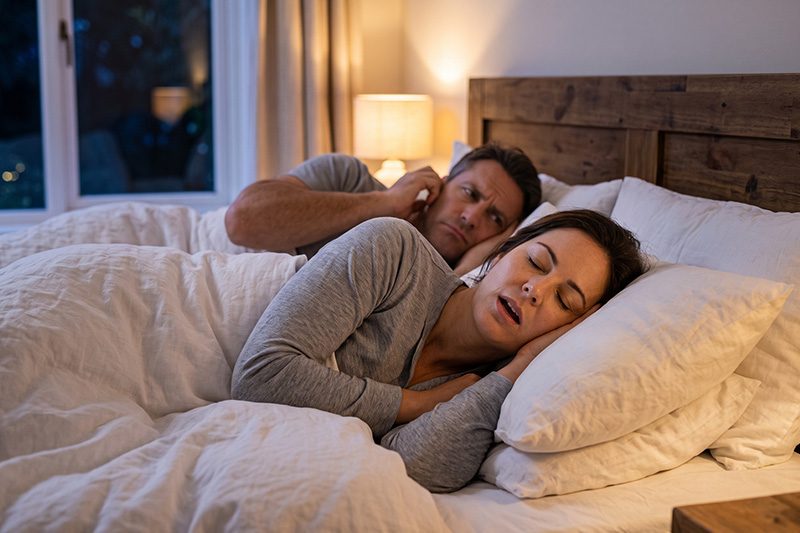
Sleep apnea can interrupt breathing dozens, sometimes hundreds, of times in one night. Most people who have it have no idea.
The interruptions happen while you are unconscious, so the first person to notice is usually a partner. The rest of the symptoms show up during the day, where they get blamed on stress, age, a heavy schedule, or not enough sleep.
Knowing the warning signs is how most of my patients ended up in my office. Somebody recognized one of these and did something about it.
What Is Sleep Apnea?
Obstructive sleep apnea is the most common form. Tissues in the upper airway repeatedly narrow or close during sleep.
An "apnea" is a complete interruption in airflow. A partial obstruction that significantly reduces breathing is a "hypopnea." Both drop oxygen levels and trigger brief awakenings that break up your sleep.
Central sleep apnea is a different problem. There the brain does not reliably send the correct signal to the muscles that control breathing. Some patients have features of both.
1. Loud, Persistent Snoring
Snoring happens when air moves through a narrowed airway and makes the surrounding tissue vibrate. Not everyone who snores has sleep apnea. Loud, frequent, disruptive snoring is still its best-known warning sign.
Snoring that suddenly goes quiet and is followed by a gasp usually means breathing stopped.
I want to say something about snoring that will not be popular with some of my colleagues. Most of sleep medicine do not treat snoring and does not care much about it, because it does not move the apnea-hypopnea index. Ear, nose and throat surgeons are the exception, and I trained as one. Snoring is a symptom. It tells you the airway is narrow, it is destroying your partner's sleep, and it is worth explaining rather than dismissing.
2. Witnessed Pauses in Breathing
A partner may notice you stop breathing, go unusually quiet, then start again with a snort, a gasp, or a jerk of the body.
Do not let anyone wave this off, particularly when it happens repeatedly. Of all the symptoms on this list, this is the one that should get you an appointment this month.
3. Gasping or Choking During Sleep
Waking suddenly with the feeling that you cannot breathe is frightening. It happens when the brain briefly arouses the body in response to a blocked airway or a falling oxygen level.
Some people have no memory of these episodes at all in the morning, which is why a partner's account is worth so much.
4. Excessive Daytime Sleepiness
Excessive daytime sleepiness means feeling abnormally sleepy during ordinary waking activities. You fight to stay awake while reading, watching television, working, sitting in meetings, or riding in a car.
Falling asleep at the wheel, or having a near-miss because of sleepiness, needs attention immediately rather than at your next physical.
5. Morning Headaches
Repeated oxygen changes, disrupted breathing, and poor sleep quality all contribute to headaches on waking. Sleep-apnea headaches tend to fade over the first few hours of the day.
Morning headaches have many other causes, so this one belongs in context with the rest of your symptoms.
6. Waking With a Dry Mouth or Sore Throat
People with a blocked nose or a narrowed airway breathe through their mouth overnight. That leaves you with dry mouth, thirst, bad breath, or a raw throat in the morning.
The nose deserves more attention here than it usually gets. In my surgical years I saw many patients whose entire problem started with a nose that had not moved air properly in a decade, and nobody had ever looked.
7. Difficulty Concentrating
Fragmented sleep degrades attention, memory, reaction time, and decision-making. Patients describe it as brain fog, forgetfulness, or an inability to hold a thought.
This gets mistaken for normal stress and overwork constantly, especially in people whose jobs are genuinely stressful and overworked.
8. Irritability, Anxiety, or Mood Changes
Poor sleep affects your emotions. Untreated sleep apnea contributes to irritability, low mood, anxiety, reduced motivation, and friction in relationships.
Mood symptoms alone do not prove anybody has sleep apnea. They belong in the picture, though, and I have watched more than one patient's mood lift within weeks of getting treated after years on the wrong track.
9. Frequent Nighttime Urination
Waking repeatedly to urinate is not always about drinking too much water or getting older. Sleep apnea affects hormones and cardiovascular pressure in ways that increase how much urine you produce overnight.
This symptom is badly underrated. If you are up three or four times a night, discuss both the sleep-related and the urological causes with a provider before anyone starts treating your prostate.
10. Unrefreshing or Restless Sleep
You spend seven or eight hours in bed and wake exhausted. Frequent movement, sweating, unexplained awakenings, or the sense that you barely slept all point toward fragmented sleep.
The body can arouse briefly after every obstructive event without ever creating a memory of waking up. That is why patients tell me with complete sincerity that they slept straight through.
Sleep Apnea Symptoms in Women
Women have loud snoring and witnessed apneas too. They also frequently report symptoms that nobody associates with sleep apnea, including:
- Insomnia
- Fatigue rather than obvious sleepiness
- Morning headaches
- Anxiety or depression
- Restless sleep
- Frequent awakenings
- Difficulty concentrating
Symptoms often become more noticeable during and after menopause. Because the presentation is less stereotypical, sleep apnea in women gets missed. Let me put my usual version of it here: this is not a disorder of elderly men. It affects women, it affects pregnant patients, and it affects children.
Risk Factors to Know
Sleep apnea affects people of any body type, age, or gender. Risk is higher with obesity, a large neck circumference, certain jaw or airway structures, nasal obstruction, enlarged tonsils, family history, increasing age, alcohol use, and smoking.
High blood pressure, atrial fibrillation, cardiovascular disease, and type 2 diabetes often show up alongside it. My standing advice to referring physicians is blunt: if your patient has resistant hypertension, atrial fibrillation, PCOS, or has had an ocular stroke, test them. The numbers behind those associations are large enough that waiting for the patient to complain is the wrong strategy.
What Does AHI Mean?
The apnea-hypopnea index estimates the average number of apneas and hypopneas per hour during a sleep study. It helps providers classify severity.
Symptoms, oxygen levels, medical history, and the type of test all matter as well, and AHI should always be interpreted by a qualified professional. A number without a clinician attached to it has told you almost nothing.
When Should You See a Specialist?
Consider an evaluation if you have several warning signs, if somebody has watched you stop breathing, or if daytime sleepiness is affecting your safety or your quality of life.
An eligible patient can usually complete a home sleep apnea test in their own bed. More complex symptoms or medical conditions call for an in-lab study. Getting tested no longer means waiting months for a laboratory appointment, which used to be the single biggest reason people gave up before they started.
If you think you may have sleep apnea, take BlueSleep's 60-second risk screener and schedule a consultation. You cannot diagnose this from symptoms alone. You can take the first step toward finding out.
Jordan Stern, MD
BlueSleep Founder, CEO and Medical Director
Our latest stories





