

PCOS and Sleep Apnea: Why You Are Still Exhausted
Many women with PCOS have undiagnosed obstructive sleep apnea. It is one of the most common overlooked causes of exhaustion in PCOS, it has nothing to do with willpower or lifestyle, and it can be tested from your own bed. BlueSleep can help you find out in two nights at home.

When a Full Night’s Sleep Doesn’t Help
The pattern is familiar to a lot of women with PCOS. You sleep seven or eight hours and wake up as tired as when you lay down. You need caffeine to get through the morning. The brain fog rolls in by afternoon. And when you raise it, you hear the same answers: it’s your hormones, it’s stress, it’s your weight.
Sometimes those answers are part of the story. But there is a question hiding underneath them that rarely gets asked: what is actually happening to your sleep while you are asleep?
Obstructive sleep apnea interrupts your breathing over and over through the night. Each interruption pulls you out of deep sleep, usually without waking you enough to remember it. You can spend a full night in bed and get very little restorative sleep, which is exactly what exhaustion that “sleep doesn’t fix” feels like from the inside.
In one study of women with PCOS, 80 percent reported daytime sleepiness, compared with 25 percent of women without PCOS. That gap is not explained by hormones alone.
Women with PCOS
80%
reported daytime sleepiness in a study of women with PCOS.
Women without PCOS
25%
reported daytime sleepiness in the same study. Hormones alone do not explain the gap.
Why Does PCOS Cause Sleep Apnea?
The short answer
Women with PCOS are significantly more likely to develop obstructive sleep apnea, and the increased risk is present regardless of body weight. Higher androgen levels, lower estrogen levels and insulin resistance all affect how the upper airway behaves during sleep. Because sleep apnea in women often shows up as fatigue, insomnia or morning headaches rather than loud snoring, it is frequently missed. A home sleep test is the only way to confirm it, and it is usually covered by insurance.
PCOS does not directly cause sleep apnea, but it raises the risk substantially, through several mechanisms working together.
Higher androgen levels and lower estrogen and progesterone levels change how the muscles of the upper airway hold tension during sleep, making the airway more likely to narrow or collapse. Insulin resistance, which is central to PCOS for many women, is independently linked to sleep apnea, and the relationship runs both ways, because fragmented, low-oxygen sleep worsens insulin resistance in turn. Changes in body composition can add to the picture.
One point deserves to be stated plainly, because so many women are told otherwise: the increased risk holds regardless of body weight. Thin women with PCOS carry it too. If you have been told you cannot have sleep apnea because you do not fit the picture, that is not a diagnosis. It is a stereotype.
Researchers studying this overlap have concluded that sleep apnea is under-recognized by the clinicians managing PCOS, and have recommended a low threshold for testing. That is the medical literature saying, in its own language, what many women with PCOS already suspect: this gets missed.
Hormone levels
Higher androgens and lower estrogen and progesterone change how the upper airway muscles hold tension during sleep.
Insulin resistance
Independently linked to sleep apnea, and the relationship runs both ways: fragmented, low-oxygen sleep worsens insulin resistance.
Body composition
Can add to the picture, but the increased risk is present regardless of body weight.
Sleep Apnea in Women Doesn’t Look Like the Stereotype
Picture sleep apnea and you probably picture a middle-aged man snoring loudly enough to shake the walls. That picture is the reason so many women go undiagnosed.
Snoring may be light, occasional, or absent altogether. A woman who reports exhaustion and broken sleep is far more likely to be offered an antidepressant or told to exercise than to be offered a sleep test. That is how sleep apnea in women stays hidden behind sleep apnea without snoring presentations.
If parts of that list feel like your ordinary life, that is exactly the situation a sleep test exists to resolve.
In women, sleep apnea more often looks like:
 Fatigue that no amount of sleep repairs
- Waking unrefreshed night after night
- Insomnia: trouble staying asleep, or waking at 3 or 4 a.m.
- Low mood, anxiety, or irritability
- Morning headaches
- Daytime sleepiness that gets blamed on everything else
Related reading: sleep apnea in women - sleep apnea during pregnancy
Signs Worth Acting On
Consider getting evaluated if you have PCOS and any of these are true:
- You wake unrefreshed most mornings, whatever time you went to bed
- You wake in the night to use the bathroom more than once
- You fight sleepiness during the day: meetings, reading, driving
- Your concentration and memory feel worse than they should
- You wake with headaches or a dry mouth
- You snore, even quietly, or a partner has noticed pauses in your breathing
Free Sleep Screener
How to Find Out: A Home Sleep Test
Most BlueSleep patients test at home. There is no night in a lab: a small home sleep test device ships to your door, and you wear it for two nights in your own bed while it records your breathing, oxygen levels, heart rate and sleeping position. A board-certified sleep specialist reviews the results and goes through them with you by video: whether sleep apnea is present, how severe it is, and what to do about it.
A home sleep test covered by insurance is the usual case: most medical plans cover testing when it is clinically indicated, and BlueSleep checks your benefits before anything ships, so there is no surprise bill. See Pricing
If the Test Says Yes: What Happens Next
First, nothing bad. A positive test is not a machine strapped to your face by default. It is information, and it is the beginning of feeling better.
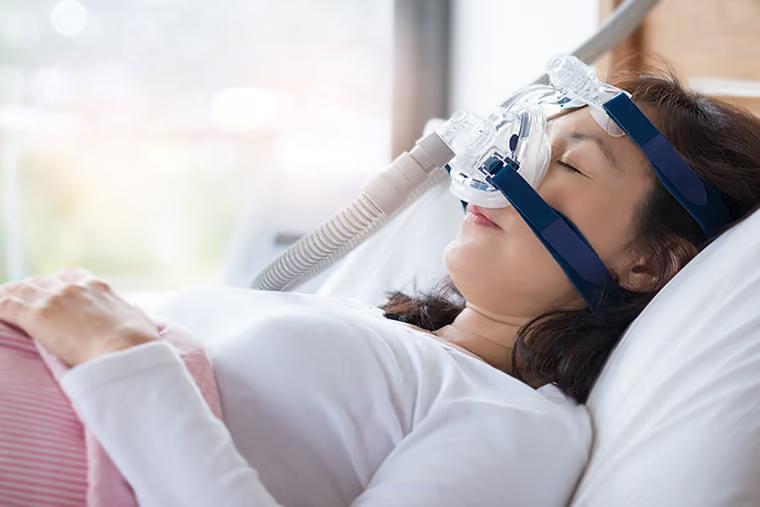
Your treatment follows from your results. Mild and moderate sleep apnea is often treated with a custom oral appliance, a small, quiet device worn during sleep. CPAP is the route for more severe apnea, or where it suits a patient better. Your specialist explains both honestly, including what each is like to live with, and the choice is made with you.
Mild to moderate
Custom oral appliance
A small, quiet device worn during sleep. For many women whose apnea is mild or moderate, this is the whole treatment.
More severe
CPAP
The gold standard for more severe apnea, or where it suits a patient better, with fitting and follow-up included.
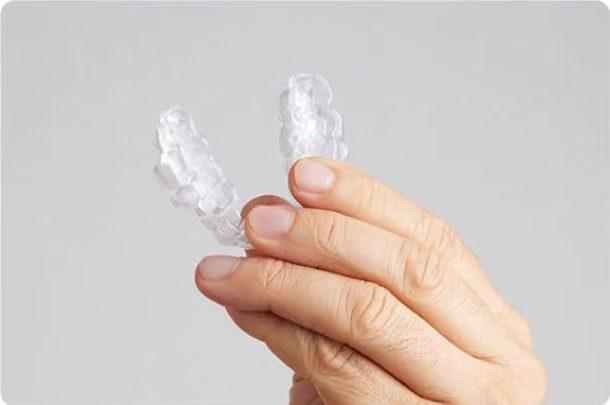
Custom Oral Appliances: Small, Silent, Made for You
It is silent, needs no power, travels in a small case, and is custom-made from a scan of your teeth by BlueSleep’s dental sleep providers, then adjusted over the following weeks until it is both comfortable and effective, with follow-up to confirm it is genuinely controlling the apnea.
BlueSleep’s dental sleep team has presented outcome data on thousands of oral appliance cases at international sleep medicine meetings, including World Sleep 2025. For many women whose apnea is mild or moderate, this is the whole treatment.
CPAP, When It’s the Right Choice
What Treating Sleep Apnea Does and Doesn’t Change
Treating sleep apnea treats the sleep apnea. When breathing stops being interrupted, sleep becomes restorative again, and that is why patients so often report better energy, clearer concentration and steadier mood.
It is not a treatment for PCOS. BlueSleep does not diagnose or manage PCOS, and nothing about sleep apnea treatment replaces the care you already receive from the clinicians managing your hormones, your metabolism or your fertility. Keep that care exactly as it is. What we treat is the second condition that may be sitting underneath your exhaustion: the one nobody tested for.
Keep your PCOS care exactly as it is.
BlueSleep treats the sleep apnea and works alongside the clinicians managing your PCOS. Nothing here replaces that care.


Insurance and Cost
In network with many national plans


Care From a Medical Sleep Team


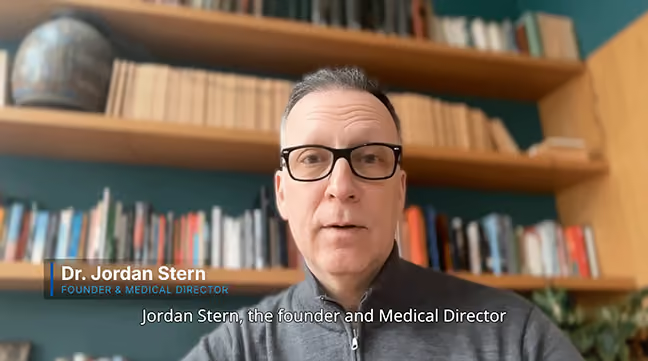
BlueSleep Founder, CEO and Medical Director


Related Reading
PCOS and Sleep Apnea FAQs





